
Real matcha is matcha
you can prove.
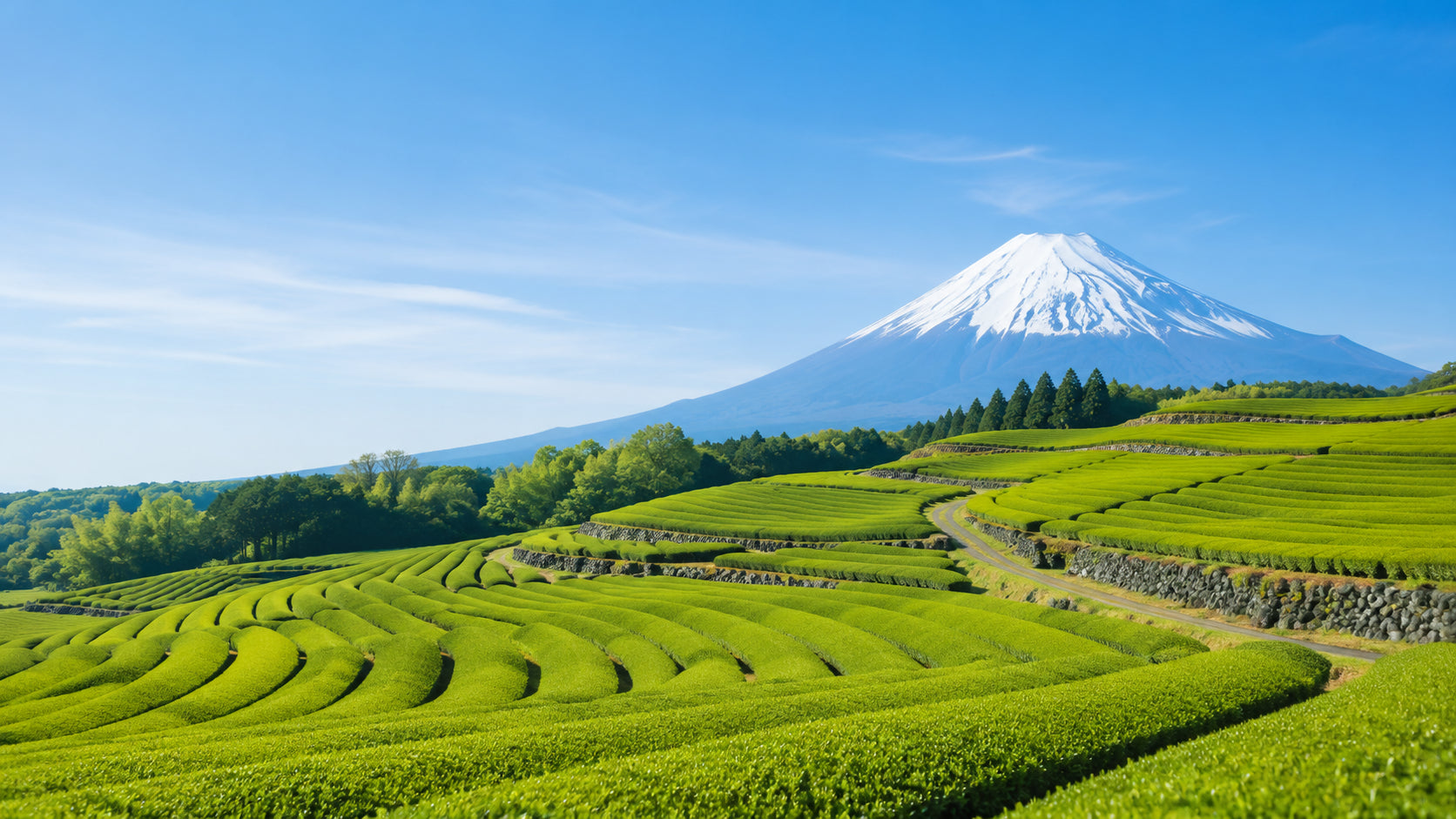
Single-origin from the Iwatahara Plateau in Shizuoka, Japan. First-harvest leaf alone, shade-grown and stone-milled into one unblended cup.
Three things we hold to.
One origin
Single-origin from the Iwatahara Plateau. Never blended with leaf from other regions.
First harvest only
The year's first picking — the leaf richest in natural sweetness and L-theanine.
Proven by numbers
Third-party composition analysis, disclosed in full rather than described in adjectives.
From one plateau,
one cup.
The Iwatahara Plateau in Shizuoka: flat terrain, excellent drainage, and fertile red-yellow soil — one of Japan's foremost tea regions. We use only leaf grown on contracted farms here.
A true single origin, never blended with other regions. Soil-management techniques refined through bonsai cultivation are applied directly to the tea.
Single origin / Contracted farms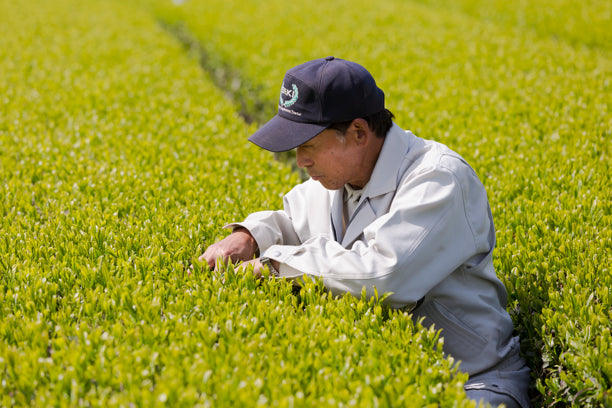
How it becomes matcha.
Matcha is grown and finished differently from sencha. We shade-grow tencha, dry it without rolling, and stone-mill it into a fine powder.
Shade-grown
Shielded from direct sun for 20+ days before harvest, concentrating umami in the leaf.
Steamed & dried
After picking, leaves are steamed without rolling, then carefully dried into tencha.
Stone-milled
Slowly ground on a stone mill into an exceptionally fine matcha powder.
| First harvest (FUJINOMIDORI) | Later harvests | |
|---|---|---|
| Sweetness | Pronounced | Mild |
| Bitterness | Mild | Pronounced |
| L-theanine & caffeine | High | Low |
| Picking season | Late Apr – late May | Mid-June onward |
| Grade | Highest | — |
FUJINOMIDORI uses only first-harvest leaf — the richest in sweetness and theanine.
Taste, backed by numbers.
We commissioned an independent laboratory to analyze our first-harvest matcha itself. The figures below are shown per 2g serving, calculated from the measured values for the current lot in that report.
Epigallocatechin gallate
Umami amino acid
Total ascorbic acid
Anhydrous caffeine
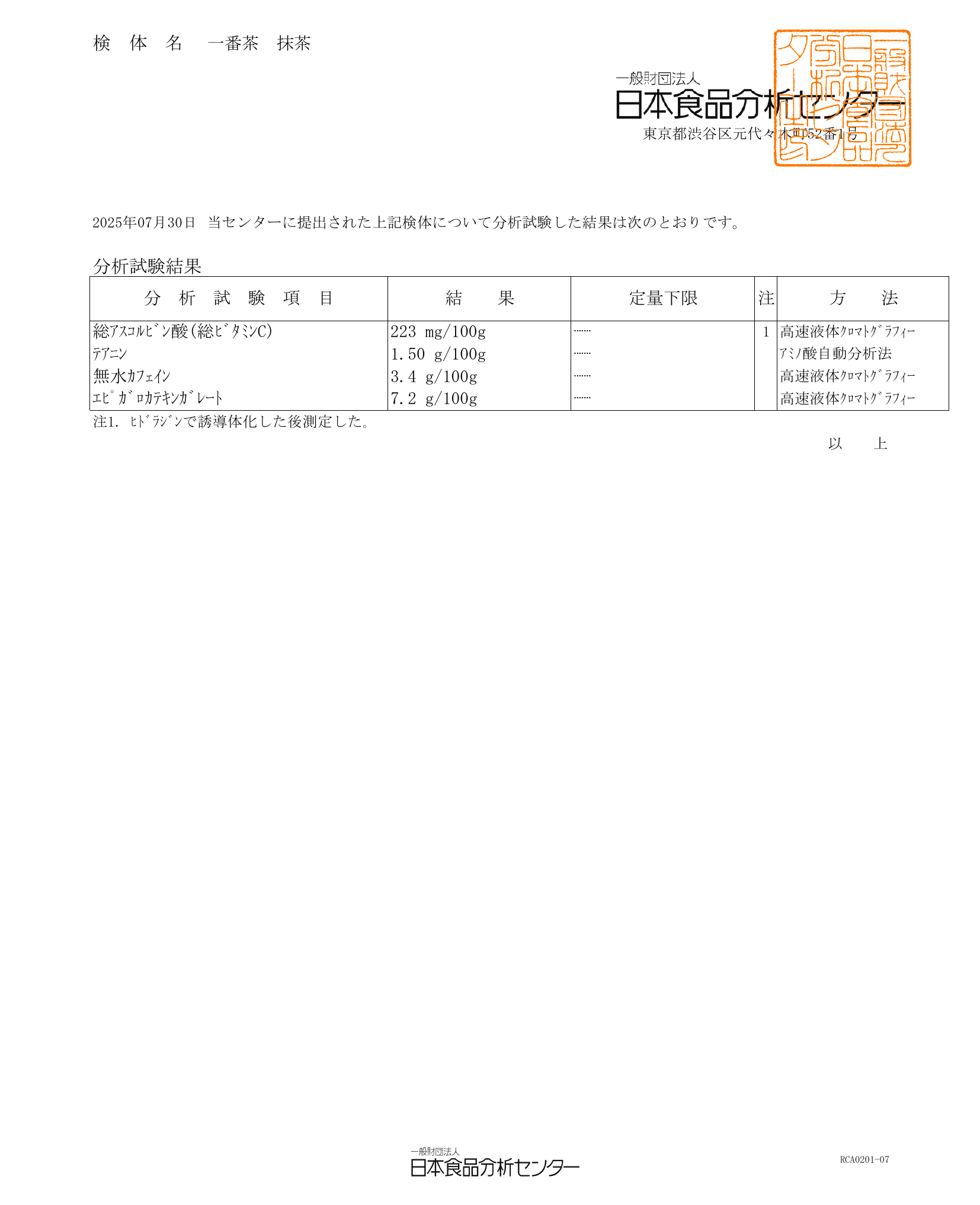
EGCG is the principal tea catechin and the most abundant in the leaf. We publish our certificate of analysis so quality is shown in numbers, not adjectives. Figures are shown per 2g serving, derived from the current lot's analysis; values vary by lot and are not medical advice.
Awarded the Minister's Prize.
Honored with the Minister of Agriculture, Forestry and Fisheries Award — the highest distinction at the tea industry's three major competitions.
- Top HonorMinister of Agriculture, Forestry & Fisheries AwardFirst Class · First Place
- 56th National Tea CompetitionFirst Class · First Place
- 44th Kanto Block Tea ExhibitionFirst Class · First Place
- 52nd Shizuoka Prefectural Tea CompetitionFirst Class · First Place
- 54th Shizuoka Prefectural Tea CompetitionFirst Class · First Place
How it's made is visible.
Certification
ASIAGAP certified (Reg. A220000013). Pesticide and residue limits checked rigorously against international food-safety and agricultural standards.
Traceability
We inspect our contracted growers' fields on a regular cycle and track each crop's condition through the season.
Documentation
From fertilization plans to pesticide volume and timing, every step is set in advance and recorded.